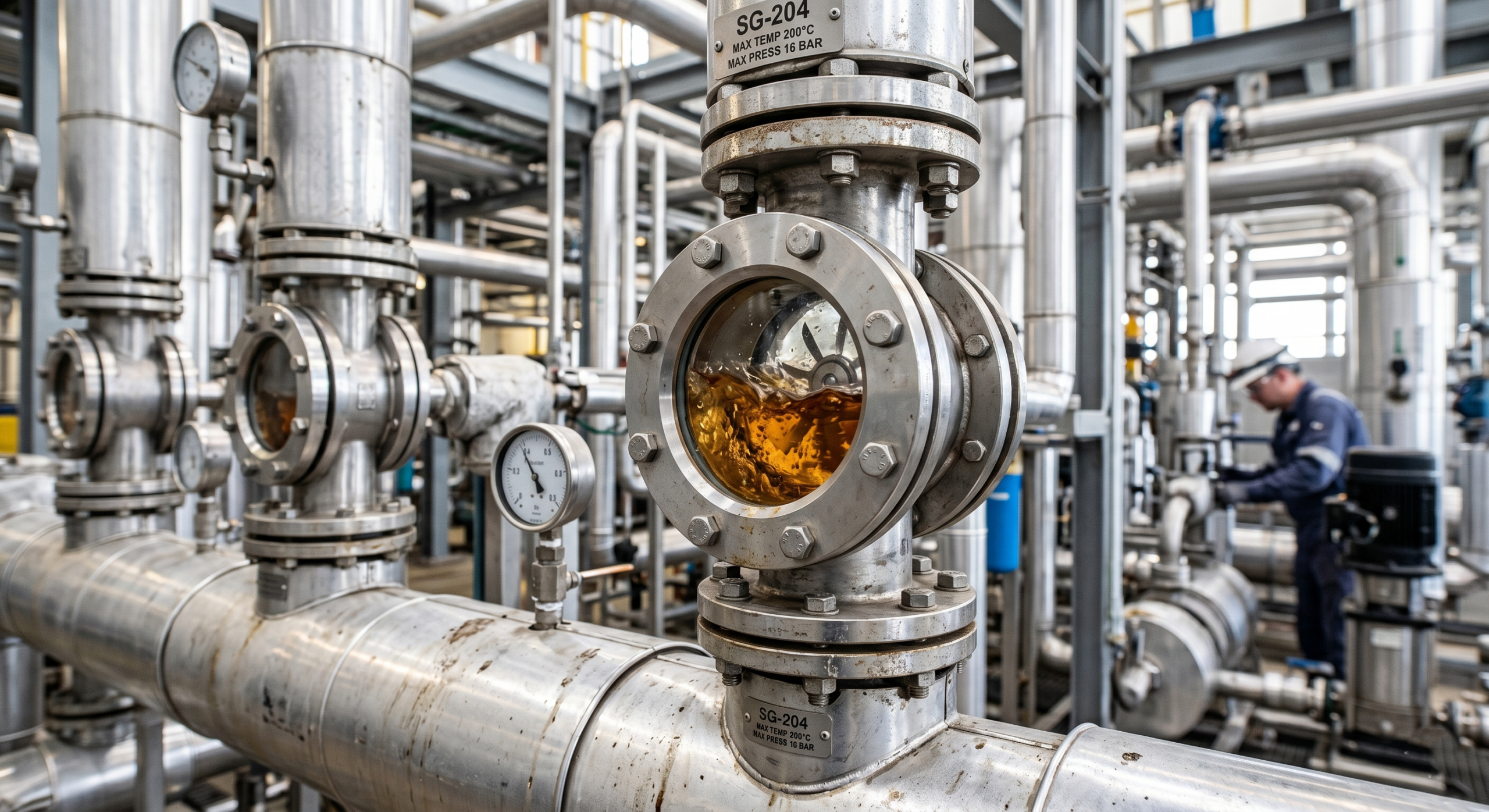
Industrial sight glasses fail due to pressure stress, thermal shock, chemical corrosion, improper installation, and aging components. When a sight glass cracks, leaks, or breaks, it can create serious safety hazards, contaminate systems, and shut down production. Understanding the root causes of sight glass failure helps manufacturers and maintenance teams reduce downtime and improve equipment reliability.
Electro-Seal manufactures durable fused glass-to-metal observation tools and OEM sight glasses designed for demanding industrial environments.
Why Sight Glass Reliability Matters
Sight glasses are critical components used to monitor:
- Liquid levels
- Fluid flow
- Pressure conditions
- Internal system operation
In many industrial systems, operators rely on sight glasses for continuous visual monitoring without interrupting production.
A failed sight glass can lead to:
- Fluid leaks
- Pressure loss
- Product contamination
- Equipment shutdowns
- Safety hazards
- Expensive emergency repairs
In industries like aerospace, agriculture, chemical processing, and industrial manufacturing, reliability is essential.
The Most Common Causes of Sight Glass Failure
Understanding why failures happen is the first step toward prevention.
1. Thermal Shock
Thermal shock occurs when glass experiences rapid temperature changes.
For example:
- Cold liquid entering a hot system
- Sudden steam exposure
- Rapid shutdown or startup cycles
When glass expands or contracts too quickly, internal stress develops and cracking can occur.
Lower-quality materials are especially vulnerable.
Borosilicate glass is commonly used in industrial applications because of its resistance to thermal expansion [Corning Borosilicate Glass Information – https://www.corning.com/worldwide/en/products/advanced-optics/product-materials/borosilicate-glass.html].
Electro-Seal manufactures fused glass-to-metal assemblies designed to handle demanding thermal environments.
2. Excessive Pressure
Every sight glass has a maximum pressure rating.
When systems exceed design limits, the glass may:
- Crack
- Bow under stress
- Leak around seals
- Catastrophically fail
Pressure spikes are especially common in:
- Hydraulic systems
- Steam systems
- Industrial processing equipment
Using improperly rated components creates unnecessary risk.
Before installing a replacement sight glass, always verify:
- PSI requirements
- Temperature range
- Material compatibility
- Seal integrity
3. Chemical Corrosion
Industrial fluids can degrade both glass and sealing materials over time.
Common corrosive substances include:
- Acids
- Solvents
- Petroleum products
- Cleaning chemicals
- Industrial additives
Chemical attack may weaken:
- Gaskets
- Seal materials
- Metal housings
- Glass surfaces
Corrosion often begins slowly, making routine inspection critical.
Electro-Seal helps customers choose materials designed for their specific operating environment.
4. Improper Installation
Incorrect installation is one of the leading causes of premature sight glass failure.
Common mistakes include:
- Over-tightening bolts
- Uneven mounting pressure
- Misalignment
- Using incorrect gaskets
- Failure to follow torque specifications
Over-tightening places uneven stress on the glass and increases fracture risk.
Proper installation procedures significantly improve lifespan and safety.
5. Aging Gaskets and Seals
Even if the glass itself remains intact, worn seals can create leaks and pressure issues.
Over time, gaskets may:
- Dry out
- Crack
- Shrink
- Become chemically degraded
This often leads to:
- Fluid seepage
- Reduced pressure containment
- Increased vibration stress
Preventative gasket replacement is one of the simplest ways to avoid emergency failures.
6. Mechanical Impact and Vibration
Industrial environments expose components to constant movement and vibration.
Repeated vibration weakens mounting systems and increases stress on glass surfaces.
Accidental impacts during maintenance are also common.
Signs of vibration-related wear include:
- Loose hardware
- Small edge fractures
- Seal deterioration
- Increased leakage
Precision machining and proper fitment reduce vibration-related failure risk.
7. Poor Material Quality
Not all sight glasses are manufactured to the same standards.
Low-cost imported components may use:
- Inferior glass materials
- Weak bonding methods
- Lower machining tolerances
- Poor-quality seals
While cheaper upfront, these products often fail sooner and create higher long-term costs through downtime and replacement.
Electro-Seal manufactures precision components in-house from our Indiana facility to maintain strict quality control.
Why Fused Glass-to-Metal Construction Improves Reliability
Traditional mechanically clamped sight glasses can loosen or weaken over time.
Fused glass-to-metal assemblies improve reliability by permanently bonding the glass to a metal housing using controlled thermal processes.
Benefits include:
- Improved pressure resistance
- Better thermal stability
- Reduced leak risk
- Enhanced structural strength
- Longer service life
This design is commonly used in demanding industrial and aerospace environments.
Warning Signs of Imminent Failure
Routine inspection helps identify problems before catastrophic failure occurs.
Watch for:
- Clouding or discoloration
- Hairline cracks
- Visible leaks
- Loose mounting hardware
- Pressure fluctuations
- Surface etching
- Corrosion around seals
If any of these symptoms appear, replacement should be scheduled immediately.
Preventing Sight Glass Failure
Preventive maintenance dramatically reduces risk.
Best practices include:
Routine Inspections
Inspect components regularly for cracks, wear, and leakage.
Pressure Monitoring
Ensure systems operate within rated limits.
Correct Material Selection
Choose materials compatible with your environment.
Scheduled Gasket Replacement
Replace seals before they fail.
Professional Installation
Follow proper torque and alignment procedures.
Upgraded Components
Higher-quality assemblies often reduce long-term maintenance costs.
Why U.S.-Based Manufacturing Matters
When failures happen, fast replacement is critical.
Working with a domestic manufacturer offers:
- Faster shipping
- Better communication
- Reliable quality control
- Easier customization
- Reduced supply chain delays
Electro-Seal operates from:
202 S Ecker Ave
Bourbon, IN 46504
We ship nationwide to industrial facilities, OEMs, and manufacturers across the United States.
Frequently Asked Questions
What is the most common cause of sight glass failure?
Thermal shock and excessive pressure are among the most common causes.
How often should sight glasses be inspected?
Inspection frequency depends on operating conditions, but regular visual checks are recommended.
Can chemical exposure damage sight glasses?
Yes. Certain chemicals can degrade seals, glass surfaces, and metal housings.
What are fused glass-to-metal assemblies?
These are observation tools where glass is permanently bonded to metal for increased durability and leak resistance.
Do you manufacture custom sight glasses?
Yes. Electro-Seal manufactures OEM and custom observation tools for industrial applications.
Improve Reliability with Better Sight Glass Manufacturing
Industrial sight glass failure creates safety risks, production delays, and costly downtime. Choosing properly manufactured components and following preventative maintenance practices greatly improves reliability.
Electro-Seal manufactures fused glass-to-metal observation tools, OEM sight glasses, liquid indicators, pulleys, and custom machined components from our Indiana facility.
To request a quote or discuss replacement options:
Call: (574) 342-2105
Email: sales@electroseal.net
Hours: Mon–Fri 8:00am–4:30pm
Speak with our team today about durable industrial sight glass solutions.