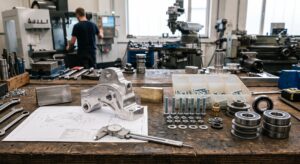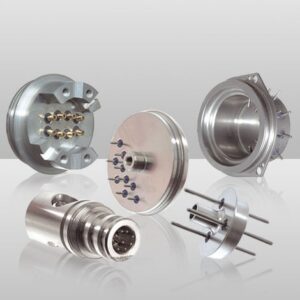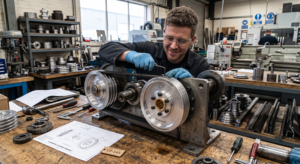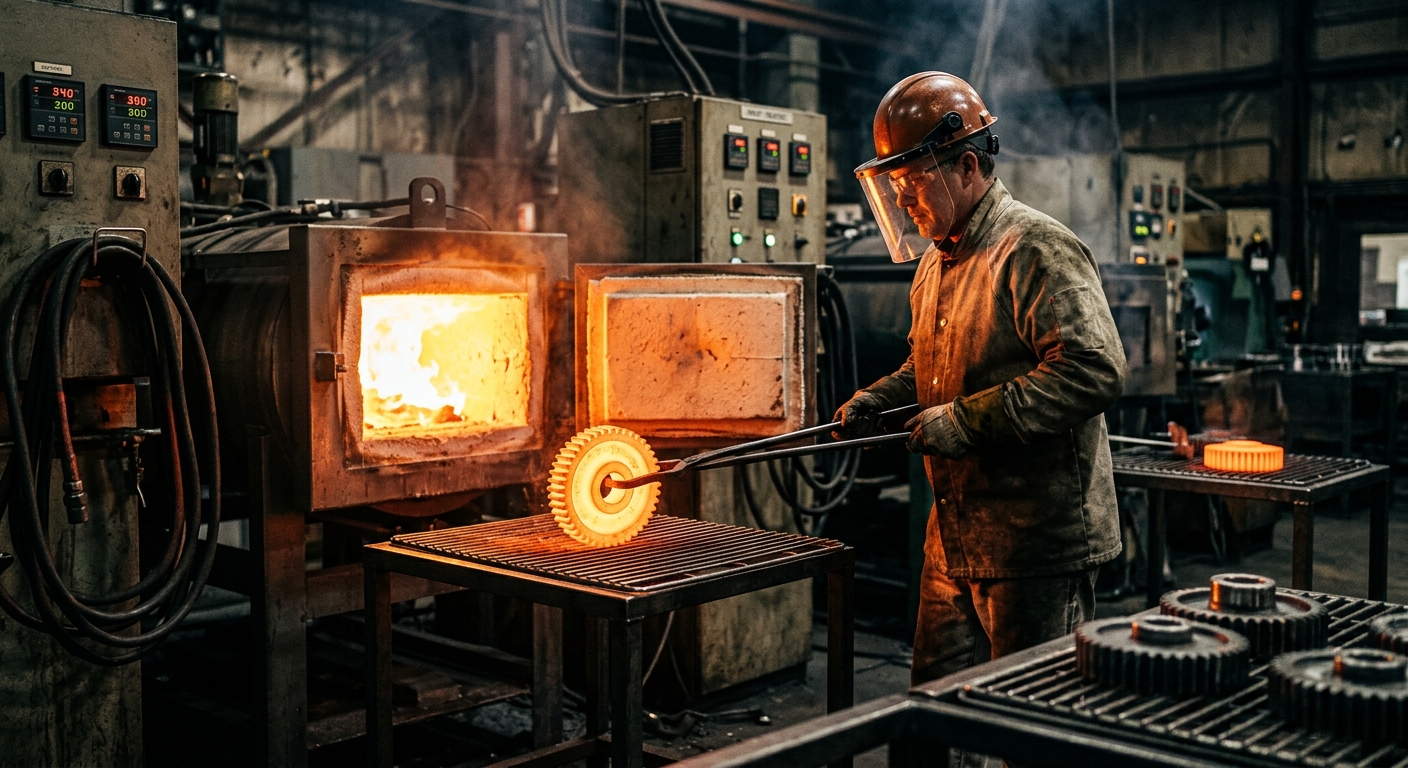
Heat treating improves machined part durability by increasing strength, hardness, wear resistance, and overall structural performance. Industrial and OEM components exposed to pressure, friction, vibration, or repeated stress often require heat treatment to achieve longer service life and improved reliability. Properly heat-treated parts reduce premature wear, lower maintenance costs, and improve equipment performance in demanding operating environments.
Electro-Seal provides precision machining, heat treating, fused glass-to-metal assemblies, OEM sight glasses, and custom industrial manufacturing solutions for customers nationwide.
What Is Heat Treating?
Heat treating is a controlled manufacturing process used to alter the physical and mechanical properties of metal components.
The process involves:
- Heating the material to a specific temperature
- Holding it at that temperature for a controlled period
- Cooling the material at a controlled rate
This changes the metal’s internal structure to improve performance characteristics.
Depending on the process, heat treating may increase:
- Hardness
- Strength
- Wear resistance
- Toughness
- Fatigue resistance
Heat treatment is commonly used in industrial manufacturing, aerospace applications, agricultural equipment, and OEM component production.
Why Heat Treating Matters in Industrial Applications
Industrial equipment operates under constant stress.
Components are often exposed to:
- Friction
- Heavy loads
- Pressure
- Repeated movement
- Vibration
- Temperature fluctuations
Without proper material treatment, parts may wear prematurely or fail under stress.
Heat treating helps components withstand demanding operating conditions for longer periods.
Common Types of Heat Treating
Several heat treatment methods are used depending on the material and application.
Annealing
Annealing softens metal and improves machinability.
Benefits include:
- Reduced internal stress
- Improved ductility
- Easier machining
This process is commonly used before additional machining operations.
Hardening
Hardening increases material strength and wear resistance.
The process typically involves:
- Heating the metal
- Rapid cooling (quenching)
Hardening is useful for components exposed to heavy wear and mechanical stress.
Tempering
Tempering is often performed after hardening to reduce brittleness.
Benefits include:
- Improved toughness
- Better impact resistance
- Reduced cracking risk
This creates a balance between hardness and durability.
Case Hardening
Case hardening creates a hard outer surface while maintaining a tougher interior core.
Advantages include:
- Improved wear resistance
- Better fatigue performance
- Increased component lifespan
This method is commonly used for gears, shafts, and rotating components.
How Heat Treating Improves Wear Resistance
Wear is one of the leading causes of industrial component failure.
Repeated friction can cause:
- Surface damage
- Material loss
- Dimensional changes
- Reduced efficiency
Heat treating improves surface hardness, helping components resist:
- Abrasion
- Friction damage
- Surface deformation
For industrial machinery operating continuously, increased wear resistance significantly extends service life.
Heat Treating Improves Structural Strength
Many machined components must withstand heavy mechanical loads.
Heat treatment increases:
- Tensile strength
- Yield strength
- Load-bearing capacity
This helps prevent:
- Cracking
- Bending
- Structural fatigue
- Premature failure
Stronger components improve equipment reliability and operational safety.
Why Heat Treating Matters for Precision Components
Precision-machined parts rely on tight tolerances and dimensional stability.
Improper material properties may lead to:
- Deformation under load
- Vibration issues
- Premature wear
- Seal failure
Heat treating helps maintain structural integrity under demanding conditions.
This is especially important for:
- Industrial pulleys
- Hydraulic components
- OEM sight glasses
- Aerospace parts
- Agricultural equipment components
Electro-Seal supports precision manufacturing and heat treating for demanding industrial applications.
Heat Treating and Corrosion Resistance
Some heat treatment processes also improve corrosion resistance when combined with proper material selection and coatings.
Corrosion can lead to:
- Surface pitting
- Structural weakening
- Seal deterioration
- Reduced equipment lifespan
Electro-Seal also offers:
- Protective coatings
- Precision finishing
- Engraving services
These finishing processes further improve long-term durability.
Material Selection Still Matters
Heat treating improves performance, but material selection remains critical.
Common industrial materials include:
- Stainless steel
- Carbon steel
- Aluminum alloys
- Specialty alloys
- Brass
Each material responds differently to heat treatment.
The correct combination of:
- Material type
- Heat treatment method
- Surface finishing
creates the best long-term results.
Electro-Seal helps customers determine the best manufacturing approach for their application.
Preventing Downtime with Better Component Durability
Component failure often leads to:
- Production shutdowns
- Emergency repairs
- Increased maintenance costs
- Lost productivity
Heat-treated components reduce the likelihood of premature failure and improve maintenance intervals.
For OEMs and industrial operators, improved durability often lowers total operating costs over time.
Why Domestic Manufacturing Improves Quality Control
Working with a U.S.-based manufacturer improves oversight throughout production.
Domestic manufacturing provides:
- Faster communication
- Better engineering collaboration
- Easier revisions
- Consistent quality standards
- Reduced supply chain delays
Electro-Seal operates from:
202 S Ecker Ave
Bourbon, IN 46504
We ship nationwide throughout the United States.
Because machining and heat treating services are coordinated closely, we maintain stronger quality control throughout the manufacturing process.
Industries That Benefit from Heat-Treated Components
Heat-treated machined parts are widely used in:
Aerospace
Components require high strength and fatigue resistance.
Agriculture
Farm equipment experiences heavy wear and outdoor exposure.
Industrial Manufacturing
Continuous production systems demand durable components.
Hydraulic Systems
Pressure systems require structural reliability.
Material Handling Equipment
Moving systems benefit from wear-resistant components.
Proper heat treatment improves reliability across all these industries.
Frequently Asked Questions
What does heat treating do to metal?
Heat treating changes the internal structure of metal to improve strength, hardness, and durability.
Does heat treating improve wear resistance?
Yes. Many heat treatment processes increase surface hardness and reduce wear.
Can all metals be heat treated?
Not all metals respond the same way. The effectiveness depends on the material composition.
Does Electro-Seal offer heat treating services?
Yes. We provide heat treating as part of our manufacturing capabilities.
Do you ship nationwide?
Yes. Electro-Seal ships throughout the United States.
Improve Component Lifespan with Heat Treating
Heat treating plays a critical role in improving machined part durability, wear resistance, and long-term performance. Properly treated components reduce downtime, improve safety, and extend equipment lifespan in demanding industrial environments.
Electro-Seal manufactures precision machined components, fused glass-to-metal assemblies, OEM sight glasses, pulleys, and custom industrial parts from our Indiana facility.
To request a quote or discuss your project:
Call: (574) 342-2105
Email: sales@electroseal.net
Hours: Mon–Fri 8:00am–4:30pm
Contact Electro-Seal today for precision industrial manufacturing solutions.